

Village/Town: Space that includes buildings and on whose entrance and exit routes are placed,.
জনবসতিপূর্ণ স্থান/ শহর/ গ্রাম: যেখানে বসবাসের বিল্ডিং অন্তর্ভুক্ত রয়েছে এবং যার প্রবেশদ্বার এবং প্রস্থান পথগুলি থাকে।

Entrance to town : Indicates the place from which the rules of behavior in traffic relative to the town govern.
শহরে প্রবেশ: শহরের প্রশাসনের সাথে সম্পর্কিত ট্র্যাফিকের আচরণের নিয়মগুলি সেই জায়গাটি নির্দেশ করে।

End of town: Indicates the place from where the rules of behavior in traffic relative to town no longer apply.
শহরের শেষ: শহরের ট্র্যাফিকের আচরণের নিয়মগুলি আর প্রয়োগ হয় না এমন জায়গাটি নির্দেশ করে।

Urban road: It is a type of road that is located within the urban area.
নগর সড়ক: এটি এক ধরণের রাস্তা যা শহর অঞ্চলে অবস্থিত।

Interurban road: It is a type of road that is located outside the urban area.
আন্তঃনগরী রাস্তা: এটি এক ধরণের রাস্তা যা শহরাঞ্চলের বাইরে অবস্থিত।

Autopista:
It is a road for the exclusive use of certain users (cars), consisting of several carriageways for the same direction of movement.
মহাসড়ক:
এটি নির্দিষ্ট ব্যবহারকারীদের (গাড়ি) একচেটিয়াভাবে ব্যবহারের জন্য একটি রাস্তা, যা একই গতিপথের জন্য বেশ কয়েকটি ক্যারেজওয়ে নিয়ে গঠিত। এটিতে টোল পরিশোধ করতে হয়।

Autovías: It is a road with several carriageways for the same direction.
মহাসড়ক: এটি একই দিকের জন্য বেশ কয়েকটি ক্যারিজওয়ে সহ একটি রাস্তা। এটিতে টোল পরিশোধ করতে হয় না।

Carretera: It is a road that is out of town and its main characteristic is that it is paved.
হাইওয়ে: এটি শহরের বাইরে বাইরের একটি রাস্তা এবং এর প্রধান বৈশিষ্ট্যটি হ’ল এটি পাকা করা।
It is prohibited to circulate on autopista and autovia:
1. Pedestrian
2. Animal-drawn vehicles
3. Bicycles
4. Mopeds
5. Vehicles for people with reduced mobility
6. Personal mobility vehicles.
However, bicycle drivers over 14 years of age may circulate on the shoulders of the autovia, unless for justified reasons of road safety it is prohibited by means of the corresponding signs.
Any driver who, for emergency reasons, is forced to circulate with his vehicle on a autopista y autovia at abnormally reduced speed, must leave it at the first exit.
Use of the hard shoulder (Conventional road): The driver of any animal-drawn vehicle, Pdestrian, special vehicle with a maximum authorized weight of not more than 3,500 kilograms, cycle, moped and vehicle for people with reduced mobility, in the event that there is no road or part of the road. If it is passable and sufficient for each of them, it will drive along the shoulder to its right and, if it is not, it will use the essential part of the road.

Road for automobiles: It is a road specially reserved for automobiles, with a single lane in the same direction and with limited access from neighboring properties. Vehicles other than automobiles will not have access.
গাড়ী লেন: এটি একই দিকের একক লেন সহ এবং পাশের সম্পত্তি থেকে সীমিত অ্যাক্সেস সহ গাড়িগুলির জন্য বিশেষভাবে সংরক্ষিত একটি গলি। অটোমোবাইল ছাড়া অন্য যানবাহনের অ্যাক্সেস থাকবে না।

Intersection:
unification of several ways, connecting with each other. It is a crossing of the paths of the vehicles.
ইন্টারসেকশন (চৌরাস্তা) :
বিভিন্ন উপায়ে একীকরণ, একে অপরের সাথে সংযোগ স্থাপন। এটি যানবাহনের পথের একটি ক্রসিং পথ।

Roundabout:It is a large-scale intersection, where all the connected roads are in a circular shape and around a central island. The circulation of vehicles is rotating. It is not allowed to go through the middle.
বৃত্তাকার:এটি একটি বৃহত আকারের চৌরাস্তা, যেখানে সমস্ত সংযুক্ত সড়কগুলি বৃত্তাকার আকারে এবং একটি কেন্দ্রীয় দ্বীপের চারপাশে থাকে। যানবাহন ঘূর্ণায়নভাবে চলাচল করে। এটির মাঝখানে দিয়ে যাওয়ার অনুমতি নেই।

Level crossing:
It is an area where a track intersects with a railway line.
লেভেল ক্রসিং:
এটি এমন একটি অঞ্চল যেখানে একটি ট্র্যাক একটি রেললাইনের সাথে মিলিত হয়।
TRAFFIC RULES
As a general rule, you will have to circulate on the road not on the shoulder, except for emergency reasons.
সাধারণ নিয়ম হিসাবে আপনাকে রাস্তায় চলাচল করতে হবে আরসেন এ নয়, জরুরি কারন ব্যতিত।
* As close as possible to the right edge of the road.
* রাস্তার ডান প্রান্ত দিয়ে যতটা সম্ভব চলাচল করতে হবে।
*Maintaining sufficient lateral separation to cross safely.
*নিরাপদে অতিক্রম করার জন্য পর্যাপ্ত পার্শ্বীয় বিয়োগ বজায় রাখা।
*Keep the opposite side of the road completely free.
*রাস্তার বিপরীত অংশটিকে সম্পূর্ণ মুক্ত রাখা।
In addition, the driver of a car or a special vehicle with an MMA greater than 3,500 kg, as a general rule, will circulate on the road and not on the shoulder.
এছাড়াও, একটি সাধারণ নিয়ম হিসাবে, 3500 কেজির বেশি এমএমএ সহ একটি গাড়ি বা একটি বিশেষ গাড়ির চালক আর্সেন এ নয়, রাস্তায় চলাচল করবে।
Two-way street inside or outside the city
দ্বিমুখী রাস্তায় শহরের ভিতরে বা বাইরে
* If there are two lanes, separated or not by road markings, it will circulate in the right lane.
* যদি দুটি লেন থাকে এবং রাস্তা চিহ্নিতকরণ দ্বারা পৃথক না করা থাকে তাহলে ডান সাইড দিয়ে চলাচল করতে হবে।
* If there are three lanes separated by discontinuous longitudinal markings:
* যদি তিনটি লেন বিচ্ছিন্ন দ্রাঘিমাংশ চিহ্ন দ্বারা পৃথক করা হয়:
> Drive in the right lane (never the left).
> ডান গলিতে ড্রাইভ করুন (কখনও বাম দিকে নয়)।
> You may use the center lane, only to pass or change direction to the left.
> কেবলমাত্র বাম দিকে দিক পরিবর্তন করতে বা অতিক্রম করতে সেন্টার লেনটি ব্যবহার করতে পারেন।

Reserved lane for buses: This lane is forbidden for drivers of vehicles other than collective passenger transport. The mention “taxi” also authorizes taxis to circulate in this lane.
বাসের জন্য সংরক্ষিত লেন: যৌথ যাত্রী পরিবহন ব্যতীত যানবাহনের চালকদের জন্য এই লেনটি নিষিদ্ধ। “ট্যাক্সি” উল্লেখটি এই লেনে চলাচল করার জন্য ট্যাক্সিগুলিকেও অনুমোদন দেয়।

Acceleration lane: To enter onto a road through an acceleration lane, observe, warn, and stop if necessary at the beginning of the lane. Then accelerates to the proper speed at the end of the acceleration lane to enter into the flow of the road.
এন্ট্রি লেন: এন্ট্রি লেনের মাধ্যমে কোন রাস্তায় প্রবেশ এর সময় লেনের শুরুতে আপনাকে অবশ্যই পর্যবেক্ষণ করতে হবে, সতর্ক করতে হবে এবং প্রয়োজনে থামাতে হবে। এরপর সঠিক গতি ত্বরান্বিত করে এন্ট্রি লেনের শেষের দিকে রাস্তায় প্রবেশ করতে হবে।

Deceleration lane: To leave a road through a deceleration lane, you must move in advance through the lane closest to the exit as soon as possible in that lane.
বহির্গমন লেন: বহির্গমন লেনের মধ্য দিয়ে একটি রাস্তা থেকে বের হতে অবশ্যই এই লেন দিয়ে যত তাড়াতাড়ি সম্ভব প্রস্থানের নিকটতম লেনের মধ্য দিয়ে অগ্রসর হতে হবে।

Additional Lanes: They are usually enabled to increase capacity on roads where there is only one carriageway. In this case, an extra lane is opened for vehicles from the center to the hard shoulders. Additional lane regulations affect the entire road: speed is limited between 60 km / h and 80 km / h; and the dipped beams are mandatory day and night. Bicycles, mopeds, certain special vehicles (up to 3,500 kilos), animal-drawn vehicles and people with reduced mobility are not authorized to use them.
অতিরিক্ত’ লেন: এগুলি সাধারণত রাস্তাগুলিতে সক্ষমতা বাড়াতে সক্ষম হয় যেখানে কেবলমাত্র একটি গাড়িবাহী রাস্তা রয়েছে। এই ক্ষেত্রে, কেন্দ্র থেকে শক্ত কাঁধ পর্যন্ত যানবাহনের জন্য একটি অতিরিক্ত লেন খোলা হয়। অতিরিক্ত রাস্তাগুলি পুরো রাস্তাকে প্রভাবিত করে: গতি ৬০ কিলোমিটার / ঘন্টা এবং ৮০ কিমি / ঘন্টা এর মধ্যে সীমাবদ্ধ; এবং দিনে ও রাতে ডিম রশ্মি জ্বালানো বাধ্যতামূলক। নির্দিষ্ট বিশেষ যানবাহন সাইকেল, মোপেড (৩,৫০০ কিলো অবধি), প্রাণী-টানা যানবাহন এবং প্রতিবন্ধী লোকেরা এটা ব্যবহারের জন্য অনুমোদিত নয়।

Contrario lane: They are the most common ‘anti-traffic jam’ lanes, frequent on highways and expressways on days of high traffic flow. Only cars without trailers and motorcycles are allowed to circulate through them. To enable them, the median is opened, a lane is “stolen” from one of the roads and its direction is changed. In this way, the blocked part of the road temporarily gains in capacity.
লেন ‘স্বাভাবিকের চেয়ে বিপরীত দিকে: এগুলি সর্বাধিক সাধারণ (‘ট্র্যাফিকবিরোধী জ্যাম’) লেন, হাইওয়ে এবং মহাসড়কে ঘন ঘন ট্র্যাফিক প্রবাহের দিনগুলিতে ঘন ঘন। কেবল ট্রেলারবিহীন গাড়ি এবং মোটরসাইকেল গুলিকে সেগুলির মধ্য দিয়ে চলাচল করার অনুমতি দেওয়া হয়েছে। তাদের সক্ষম করতে, মিডিয়ানটি খোলা হয়, একটি রাস্তা থেকে একটি গলি “চুরি” করা হয় এবং এর দিক পরিবর্তন করা হয়। এইভাবে, রাস্তার অবরুদ্ধ অংশ অস্থায়ীভাবে ক্ষমতা অর্জন করে।

Reversible lane: The reversible lane is an ‘urban’ version of the lane in the opposite direction. The reversible has the characteristic that it is enabled in one or another direction of circulation according to the needs. And this is indicated by the square traffic lights on the lanes.
রিভার্সিবল’ লেন: বিপরীত দিকের লেনটি হল একটি ‘শহুরে’ সংস্করণ। এটির বৈশিষ্ট্য হচ্ছে যে এটি প্রয়োজনীয়তা অনুসারে চলাচলের জন্য এক বা অন্য দিকে সক্ষম হয় এবং এটি লেনের স্কোয়ার ট্র্যাফিক লাইট নির্দেশিত হয়।

VAO lane: The lanes for ‘High Occupancy Vehicles’ (HOV) are designed to give priority to the circulation of vehicles with passengers in times of high traffic. For this reason, they are reserved for motorcycles, passenger cars, mixed vehicles and buses.
VAO লেন: হাই ট্র্যাফিকের সময় যাত্রীদের সাথে যানবাহন চলাচলকে অগ্রাধিকার দেওয়ার জন্য ‘উচ্চ অধিগ্রহণের যানবাহন’ (VAO) এর লেনগুলি তৈরি করা হয়েছ। এই কারণে, এই কারণে, এটি মোটরসাইকেল, যাত্রী গাড়ি, মিশ্র গাড়ি এবং বাসের জন্য সংরক্ষিত।

Tunnels or underpasses
In tunnels or underpasses, the driver must have to folow all the traffic rules especially those referring to the prohibition of stopping, parking, changing the direction of travel, going backwards and overtaking. In addition, you must use the corresponding lighting.
টানেল বা আন্ডারপাসগুলিতে, ড্রাইভারকে অবশ্যই সমস্ত ট্র্যাফিক নিয়মগুলি অনুসরণ করতে হবে, বিশেষত: থামানো, পার্কিং, ভ্রমণের দিক পরিবর্তন করা, পিছনের দিকে যাওয়া এবং ওভারটেকিং করা নিষেধের কথা উল্লেখ করে। তদতিরিক্ত, আপনাকে অবশ্যই সংশ্লিষ্ট আলো ব্যবহার করতে হবে।
In tunnels or underpasses with traffic in both directions, overtaking is prohibited, unless there is more than one lane for your direction of movement, in which you can overtake without invading the opposite direction.
উভয় দিকের ট্রাফিক সহ টানেল বা আন্ডারপাসগুলিতে ওভারটেকিং নিষিদ্ধ, যদি না আপনার গতিপথের দিকনির্দেশের জন্য একাধিক লেন থাকে, যেখানে আপনি বিপরীত দিকে আক্রমণ না করেই ওভারটেক করতে পারেন।
When you do not intend to overtake, you must maintain at all times a safety distance with the preceding vehicle of at least 100 meters or a minimum interval of four seconds. In the case of vehicles whose maximum authorized mass is greater than 3,500 kilograms, the safety distance that must be kept with the preceding vehicle will be at least 150 meters or a minimum safety interval of six seconds.
যখন আপনি ওভারটেক করার ইচ্ছা করেন না, আপনার অবশ্যই সর্বদা কমপক্ষে 100 মিটার পূর্ববর্তী যানবাহন বা চার সেকেন্ডের ন্যূনতম ব্যবধানের সাথে একটি সুরক্ষা দূরত্ব বজায় রাখতে হবে। যানবাহনের ক্ষেত্রে যাদের সর্বাধিক অনুমোদিত ভর ৩,৫০০ কিলোগ্রামের চেয়ে বেশি, পূর্ববর্তী যানটি সহ সুরক্ষা দূরত্বটি অবশ্যই কমপক্ষে ১৫০ মিটার বা ন্যূনতম সুরক্ষা ব্যবধান হবে ছয় সেকেন্ডের।
In tunnels and underpasses:
ক) জরুরি অবস্থা দ্বারা:
> Turn off the engine, turn on the hazard and position lights and the triangles. abandon the vehicle and go to a shelter or exit the tunnel.
> ইঞ্জিন বন্ধ করুন করুন বিপত্তি এবং পজিশন আলো জ্বালান এবং ত্রিভুজগুলি করুন করুন যানবাহন ত্যাগ করুন এবং একটি আশ্রয়ে যান বা টানেল প্রস্থান করুন করুন
খ) ট্রাফিক প্রয়োজনের কারণে (ট্র্যাফিক জ্যাম):
> Turn off the engine, turn on the emergency light and position DO NOT exit the vehicle.
> ইঞ্জিনটি বন্ধ করুন করুন জরুরী আলো এবং আলো আলো চালু করুন ছেড়ে যাবেন যাবেন না
গ) আগুন দিয়ে:
> Move/out of the vehicle to the right and turn off the engine.
> গাড়িটি ডান দিকে সরান এবং ইঞ্জিনটি বন্ধ করুন
> Leave the keys in and the doors open
> চাবি রেখে দিন এবং দরজা খোলা রেখে দিন
> Abandon the vehicle and go to a shelter or exit the tunnel away from the fire.
> যানবাহন ত্যাগ করুন এবং একটি আশ্রয়ে যান বা আগুনের বিপরীত দিকে থেকে থেকে করুন করুন
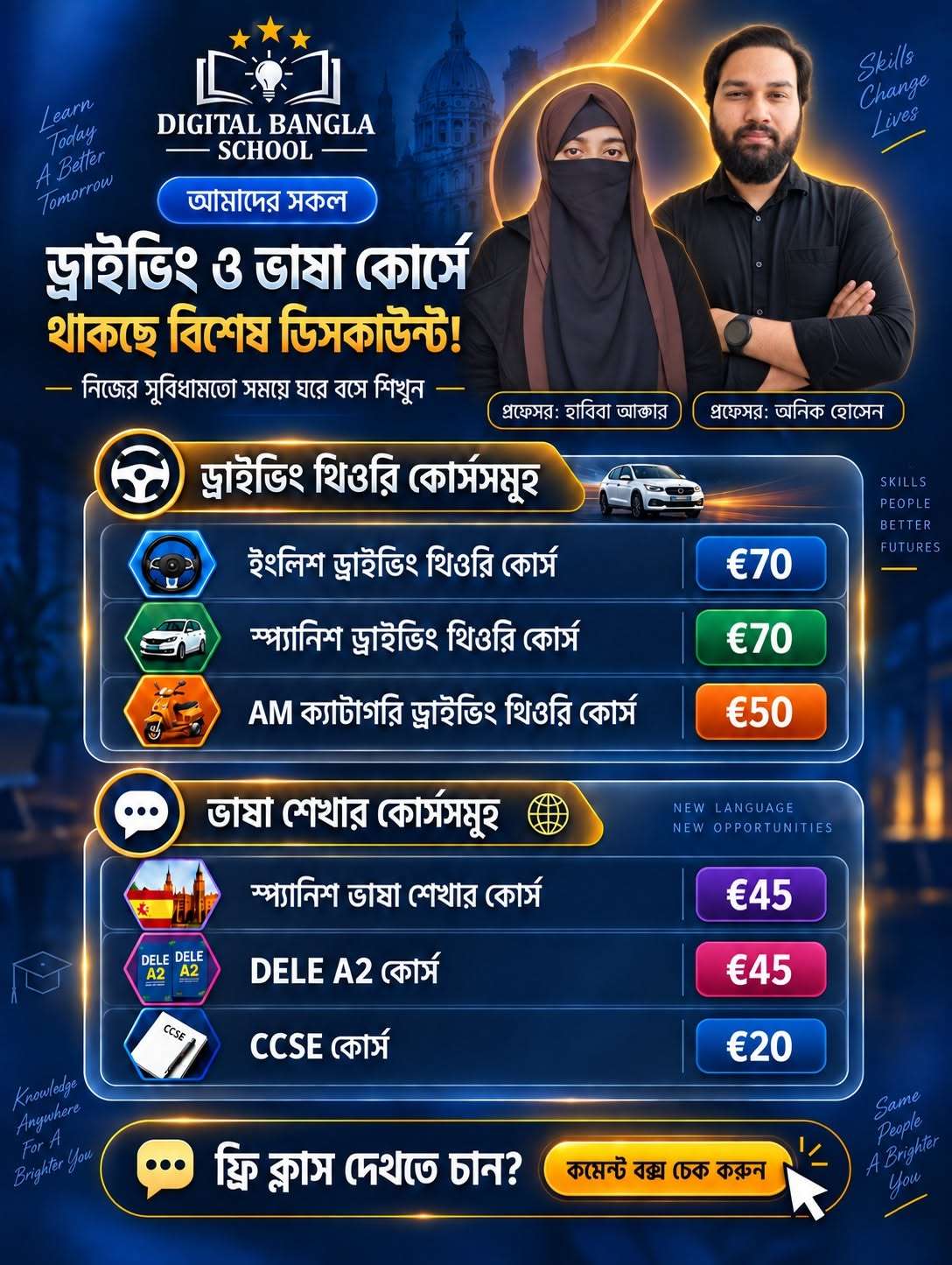
নীচের তথ্যগুলো দিন। আমরা WhatsApp বা ইমেইলের মাধ্যমে আপনার সাথেযোগাযোগ করব ইনশাআল্লাহ।
আপনার দেওয়া তথ্যগুলো DELE A2 কোর্স ও পরীক্ষার সম্পর্কিত যোগাযোগের জন্যই ব্যবহার করা হবে। আমরা আপনার তথ্য অন্য কোথাও শেয়ার বা বিক্রি করব না।
